

Alfred Dreyfus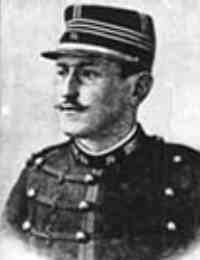
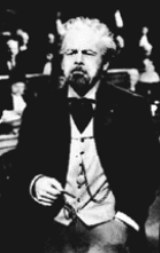 Émile
Zola
Alfred DreyfusÉmile
Zola
 The
Dreyfus case underscored and intensified bitter divisions within French
politics and society. The controversy involved critical institutions and
issues, including monarchists and republicans, the political parties, the
Catholic Church, the army, and strong anti-Semitic sentiment. Alfred Dreyfus,
an obscure captain in the French army, came from a Jewish family that had
left its native Alsace for Paris when Germany annexed that province in
1871. In 1894 papers discovered in a wastebasket in the office of a German
military attaché made it appear that a French military officer was
providing secret information to the German government. Dreyfus came under
suspicion, probably because he was a Jew and also because he had access
to the type of information that had been supplied to the German agent.
The army authorities declared that Dreyfus’ handwriting was similar to
that on the papers. Despite his protestations of innocence he was found
guilty of treason in a secret military court-martial, during which he was
denied the right to examine the evidence against him. The army stripped
him of his rank in a humiliating ceremony and shipped him off to [life
imprisonment on] Devil’s Island, a penal colony located off the coast of
South America. The political right, whose strength was steadily increasing,
cited Dreyfus’ alleged espionage as further evidence of the failures of
the Republic. Édouard Drumont’s right-wing newspaper La Libre
Parole intensified its attacks on the Jews, portraying this incident
as further evidence of Jewish treachery.
Dreyfus
seemed destined to die in disgrace. He had few defenders, and anti-Semitism
was rampant in the French army. An unlikely defender came to his rescue,
motivated not by sympathy for Dreyfus but by the evidence that he had been
“railroaded” and that the officer who had actually committed espionage
remained in position to do further damage. Lieutenant Colonel Georges Picquart,
an unapologetic anti-Semite, was appointed chief of army intelligence two
years after Dreyfus was convicted. Picquart, after examining the evidence
and investigating the affair in greater detail, concluded that the guilty
officer was a Major named Walsin Esterhazy. Picquart soon discovered, however,
that the army was more concerned about preserving its image than rectifying
its error, and when he persisted in attempting to reopen the case the army
transferred him to Tunisia. A military court then acquitted Esterhazy,
ignoring the convincing evidence of his guilt.
“The
Affair” might have ended then but for the determined intervention of the
novelist Émile Zola, who published his denunciation (“J’accuse!”)
of the army cover-up in a daily newspaper. [Note: Zola was found guilty
of libeling the army and was sentenced to imprisonment. He fled to England,
where he remained until being granted amnesty.] At this point public passion
became more aroused than ever, as the political right and the leadership
of the Catholic Church — both of which were openly hostile to the Republic
— declared the Dreyfus case to be a conspiracy of Jews and Freemasons designed
to damage the prestige of the army and thereby destroy France.
Sometime
later another military officer discovered that additional documents had
been added to the Dreyfus file. He determined that a lieutenant colonel
(Hubert Henry) had forged the documents — which seemed to strengthen the
case against Dreyfus — in anticipation that Dreyfus would be given a new
trial. Immediately after an interrogation the lieutenant colonel committed
suicide. In 1899 the army did in fact conduct a new court-martial which
again found Dreyfus guilty, although it observed that there were “extenuating
circumstances.” The army then sent Dreyfus back to Devil’s Island.
Later
in 1899 the president of France pardoned Dreyfus, thereby making it possible
for him to return to Paris, but he had to wait until 1906 — twelve years
after the case had begun — to be exonerated of the charges, after which
he was restored to his former military rank.
“The
Affair” had inspired moderate republicans, Radicals, and socialists to
work together, and the ultimate exoneration of Dreyfus strengthened the
Republic, in no small part because of the conduct of its enemies, most
notably the army and the Catholic hierarchy. In 1905 the Radical party,
emphasizing the role of the Catholic leadership in the Dreyfus case, succeeded
in passing legislation separating church and state.
The following article appeared in Time magazine on September 25, 1995
A CENTURY LATE, THE TRUTH ARRIVES: THE FRENCH ARMY CONCEDES THAT ALFRED DREYFUS WAS INNOCENT
by FREDERICK PAINTON
In
sometimes surprising ways, the long reach of France’s history still intrudes
on the nation’s conscience. How else to explain the scene on Sept. 7 when
1,700 people, invited by France’s Central Consistory of Jews, turned out
to hear General Jean-Louis Mourrut, head of the army’s historical service.
The subject was Captain Alfred Dreyfus, who 101 years ago was sentenced
by a military court to life imprisonment on notorious Devil’s Island on
trumped-up charges that he was a spy for the Germans. Mourrut’s mission
on this occasion was to acknowledge more than a century later, and for
the first time publicly, that the French army had been wrong.
Perhaps
only in France would such a belated admission by such a deeply conservative
institution as the army still ring with meaning. For Jean Kahn, president
of the Central Consistory of Jews, Mourrut’s words were considered a significant
event: “The general said things before us that never had been said by a
military man,” said Kahn. “That is, indisputably, progress.” Less impressed,
the satirical weekly Le Canard Enchainé sarcastically wrote,
“The army got it! Incredible! Dreyfus was innocent!”
It
was not quite an apology, but much more than a historical note. The Dreyfus
case unleashed a political storm at the time. It sundered the French between
such “Dreyfusards” as the crusading writer Emile Zola who saw the young
Captain as the innocent victim of an anti-Semitic officer corps and traditionalists
who regarded any attack on the army as unpatriotic. In fact, for some anti-Semitic
groups, Dreyfus symbolized the supposed disloyalty of French Jews.
Nearly
12 years passed before Dreyfus’ conviction was reversed. Despite what he
had endured, the stoic captain never lost faith and returned to the army:
he was promoted to the rank of major and given the Legion of Honor.
Still,
like other great divisions among the French, the Dreyfus case lives on
because it remains viscerally political. Among the anti-Dreyfusards were
conservatives still opposed to the outcome of the French Revolution. Dreyfusards
saw in the case a major issue, individual rights, trampled in the name
of national security. Until Mourrut spoke, the army had appeared to assume
Dreyfus was not innocent.
Mourrut’s
appearance, in fact, was prompted by an article in the army historical
journal last year that questioned Dreyfus’ innocence, suggesting it was
merely “the thesis generally accepted by historians.” Such was the outcry
in the French Jewish community that Mourrut’s predecessor in charge of
the history division was fired. Under Defense Minister Charles Millon,
Mourrut quietly made amends, telling his audience that far from feeling
nostalgia for the past, “the army is fighting for the values of our times—the
values of truth, liberty and justice.” The French never lack for new quarrels,
but they never quite forget the old ones.