Return to Main
Page
Child of
the Dark
by Maria Carolina de Jesus
New York: Mentor Books, 1962
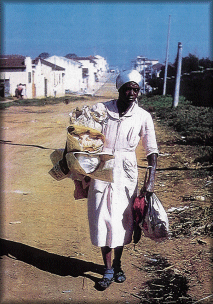
Introduction. Carolina Maria
de
Jesus was a destitute black Brazilian woman born (1914) in the rural
interior
who migrated to São Paulo, the largest industrial city in South
America,
seeking to find work and a better life. The great-grandchild of slaves,
she
became literate on her own, having attended school for less than two
years.
As a young girl, she developed a passion for reading. Later, this fed
her
desire to write down her feelings and to tell her story. In 1958 a
reporter,
Audálio Dantas, discovered that she had written a diary about
her
hard life in the city's slums or favelas. He managed to
edit
it, publish some of the entries in his newspaper, and, in August 1960,
had
it printed under the title Quarto de Despejo. It became the
best-selling
book in Brazilian history, and made its author world famous. Carolina
wrote
four other books, which were published without success, and many poems,
short
stories, and memoir fragments. Only a few years after her mercurial
success,
however, she was forced back into poverty. She died in 1977 in
destitute
poverty.
Carolina had three children, Vera, Joao and Jose Carlos. Senhor
Manuel is her occassional boyfriend. Her diary recounts the daily
struggle for survival
for her and her children, but it is about much, much more than
that.
As the translator of her diary, David St. Clair, relates, "Carolina is
not
really the main personage in her diary. It is a bigger
character--Hunger. From the first to the last page he appears
with an unnerving consistency. The other characters are
consequences of this Hunger: alcoholism, prostitution, violence, and
murder. The human beings who walk through these pages are real,
with their real names, but with slight variations they could be
other men who live with Hunger in New York, Buenos Aires, Rome,
Calcutta, and elsewhere" (Child of the Dark: The Diary of Maria de
Jesus, "Translator's
Preface," p. 14). The following excerpts are from her diary
entries
for 1958.
Key words: favela = slum or shantytown; cruzeiros
= monetary denomination; nortista = someone from Northern
Brazil; pinga = alcoholic drink; guarana = a
Brazilian drink comparable to Coca-Cola
July 28 I left Joao and just took Vera and Jose Carlos. I
was
so unhappy! With a tremendous desire to kill myself. Today whoever is
born
and can put up with this life until death must be considered a hero. A
current
verse around is this one :
I hear people saying
has a lot of money.
Hasn't one got the right to be rich
When he is a national, when he is a Brazilian?
Okay, let's leave Dr. Adhemar in peace because he has an easy life.
He's never hungry . He doesn't eat out of garbage cans like the poor.
Once when I went to Dr. Adhemar's residence I met a man who gave me his
card: Edson Marreira Branco. He was so well dressed that he
attracted all eyes. He told me that he wanted to get into politics. I
asked him: "What are your
political plans?"
"I want to get as rich as Adhemar."
I was shocked. Nobody any more has any patriotism. When I went by
the slaughterhouse
I met Dona Maria de Jose Bento who told me: "If I don't start picking
up
things in the street, I'm going to go crazy. Only God has pity on us
poor."
I showed her how to look for wild garlic. And I picked up a little
coal.
I said good-by to Dona Maria and went on. I met Dona Nene, director of
a
city school and Joao's teacher . I told her that I was very nervous and
that
there were times when I thought of killing myself. She told me that I
should
be calmer. I told her that there are days when I have nothing to give
my
children to eat.
July 30 I got 15 cruzeiros and went by
the shoemaker
to see if Vera's shoes were ready, because she complains when she has
to
go barefoot. They were, and she put on the shoes and began to smile. I
stood
watching my daughter's smile, because I myself don't know how to smile.
I
met Rosalina who was arguing with Helio. He doesn't want it told that
he
and Olga have to beg. Rosalina said that she is alone and supports
three
children. She doesn't know that her son Celso is telling everybody that
he
is going to run away from home because he hates her . He thinks his
mother
is crude and stingy . He said he wants to be my son. Then I told him:
"If
you were my boy you would be black. And being Rosalina's boy you are
white."
He answered me: "But if I was your son I wouldn't go hungry. Mama
gets some hard bread and forces us to eat nothing but hard bread until
it's all
gone." I started thinking about the unfortunate children who, even
being
tiny, complain about their condition in the world. They say that
Princess
Margaret of England doesn't like being a Princess. Those are the breaks
in
life.
July 31 I lit the fire and went to look for
water. I sent Jose Carlos for six cruzeiros worth of sugar . Luiz, who
made the fence
for me, came in and sat down. I told him that I was going out and when
I
went I preferred to leave my children by themselves. I hurried out
looking
for paper. There was little paper in the streets. I'm getting sick of
picking
up paper, because when I get to the junk yard there is a woman named
Cecilia
who works there and she is a bitch. She insults me and I pretend I
don't
hear. She says I stink. On the 27th Cecilia didn't let Jose Carlos use
the
toilet shed. She is such a bitch that her presence even keeps the junk
yard
owner away.
Today I am not nervous. I am sad. Because I think things will turn
out one way and they turn out the other. Antonio Nascimento, who lived
here in
the favela, moved. He and his "companion" were not happy here. Nobody
wanted
them in the favela. Because he ran out on four children and she on
three
children. Seven children suffering because of their parents. What did
she
gain by leaving her husband and children? She left a man with shoes to
go
with one who is barefoot.
August 1 The Welfare Department is arriving. They are coming
to
investigate the Portuguese who sells candy. On the 28th of July I went
to
visit him. He wanted some help. They claimed he didn't pay social
security and they didn't come. He was moaning and had two Portuguese
women visiting him. I asked him if he was better. He told me no. One of
the women asked me:
"And what do you do?"
"I pick up paper, scrap iron, and in my free time I write." She told
me,
with the wisest-sounding voice I ever heard: "You must take care of
your
life!"
August 2 I dressed the boys and sent them
to
school. I went out and wandered around trying to get some money. I
passed the slaughterhouse, picked up a few bones. Some women were
pawing through the garbage looking for edible meat. They claimed it was
only for dogs. That's
what I say--it's only for dogs. . . .
August 3 Today the children are only going to
get hard
bread and beans with farinha to eat. I am so tired that I
can't even
stand up. I am cold. Thank God we're not staving. Today He is helping
me.
I am confused and don't know what to do. I am walking from one side to
the
other because I can't stand being in a shack as bare as this. A house
that
doesn't have a fire in the stove is so sad! And pots boiling on the
fire
also serve as decoration. It beautifies a place. I went to Dona Nene.
She
was in the kitchen. What a marvelous sight! She was cooking chicken,
meat,
and macaroni. She grated half a cheese to put on the macaroni!
She
gave me some polenta with chicken. It's been ten years. . . . I almost
didn't
know what it was. The smell of food in Dona Nene's house was so
pleasant
that tears streamed out of my eyes, because I felt so sorry for my
children.
They would have loved those delicacies.
When I returned to the favela Leila and Amaldo were giving one of
their shows. And the children were enjoying it. I was writing when Vera
came to
tell me that they were handing out cards and there were many people in
the
street. I went running to see. A crowd was following a tall blond man
who
was leading a boy of ten by the hand. He was wearing light gray
trousers
and a dark blue jacket. He passed by me and gave me an embrace. I was
bewildered
by that embrace without even being introduced. It was the first time
I'd
ever seen the man.
Coca Cola's brother-in-law told me: "That's our Congressman, Dr.
Contrini." When he said Congressman I thought: it's election time,
that's why they're all so friendly. Senhor Contrini came to tell us
that he was a candidate in
the next elections. We of the favela have not been protected by you,
Senhor
Contrini. We don't know you, and you don't know us.
August 6 I made coffee for Joao and Jose
Carlos,
who is ten years old today. I could only give him my congratulations,
because
I don't even know if we are even going to eat today.
August 7 I got out of bed at 4 a.m. I
didn't sleep because I went to bed hungry. And he who lies down with
hunger doesn't sleep. I saw the tax collector wandering around and
asking questions. I went
to see what he was doing. He was looking for Senhor Tiburcio. He builds
shacks
to sell and begs over on Direita Street. He doesn't need to and doesn't
live
in the favela. He has already built seven shacks and sold them.
Tiburcio
has a deformed body and a soul to match.
When Joao got home from school I gave him lunch. Later we went to
the city.
We walked because I didn't have money to pay for transportation. I took
a
sack with me and picked up scrap iron I found in the streets. We went
down
Cantareira Street. Vera stared at the cheeses and choked on her saliva.
Dona
Alice told me that Policarpo, a nortista that lives here in
the favela,
brought a black woman to live in his house. He told his wife that she
was
his cousin. His wife is very good and she accepted the cousin in the
house
with pleasure. And the cousin stayed there for several days.
Policarpo's
wife would go out and he would stay at home with the cousin. One day
when
Dona Maria returned to the shack she found Policarpo and the cousin
screwing.
She didn't like it and she fought with them. Policarpo left the house
and
went with the cousin to Descalvado. He took the furniture leaving only
the
bed.
August 8 I left the house at 8 o'clock. I
stopped
at the newsstand to read the major stories. The police still haven't
caught
Promessinha. The bandit is foolish because at his age he doesn't even
know
the rules of good living. Promessinha lives in the favela at Vila
Prodente.
He proves what they've been saying: the favelas do not form character.
The
favela is the garbage dump and the authorities ignore that they have a
garbage
dump.
I went to wash clothes. At the lagoon was Nalia, Femanda, and
Iracema, who were arguing religion with a woman who said that the true
religion was
that of the Believers. Fernanda said that the Bible doesn't order
anybody to get married. That it only orders you to increase and
multiply. I told Fernanda
that Policarpo is a Believer and has many women. Then Fernanda said
that
Policarpo wasn't a Believer -"he's just hotl" I thought that was funny
and
I gave out a whoop. Something I don't discuss is religion. I went to
the
clothes and left the discussion at its height. Today the Welfare people
were
here twice, because Apaleclda had an abortion. Quita came to my shack
complaining
that Jose Carlos had thrown shit in Marli's face and that I must give a
better
education to my son.
August 9 I got out of bed furious. With
a desire
to break and destroy everything. Because I only have beans and salt.
And
tomorrow is Sunday. I went to the shoemaker to collect his wastepaper.
One
of them asked me if my book was communistic. I replied that it was
realistic.
He cautioned me that it was not wise to write of reality. Today the
favela
is spinning. Deputy Francisco Franca gave material to finish the
clubhouse
of the Blacks and Reds. He gave roof tiles and shirts and the people of
the
favela talk about this Deputy daily. They're going to give a party in
his
honor. . . .
August 11 I was paying the shoemaker and
talking
with a black who was reading a newspaper. He was furious with a
policeman
who beat up a Negro and tied him to a tree. The policeman is white.
There
are certain whites who transform blacks into whipping posts. Is this
policeman
aware of the fact that slavery has been abolished or does he think we
are
still in the era of the whip? I got frightened when I heard my children
shouting.
I recognized Vera's voice. I went to see what it was. It was little
Joao,
Deolinda's son, who had a whip in his hand and was throwing stones at
the
children. I ran and knocked the whip away from him. I smelled the
stench
of alcohol. I thought: he must be drunk because he never did this
before.
A boy of nine years. His stepfather drinks, his mother drinks, and his
grandmother
drinks. He is the one they send out to buy the booze for them. This
time
he had been drinking along the way. When he got back his mother asked
astonished:
"Is this all? What thieves those clerks are!"
August 12 I left my bed at 6:30 and went
to
get water. There was a long line. The worst thing about it is that
malice is the main subject. There was a Negress there who acted as if
she'd been vaccinated by a phonograph needle. She talked about her
daughter and son-in-law who were constantly fighting. And Dona Clara
had to listen to it because she
was the only one who was paying attention. Lately it has become very
difficult
to get water, because the amount of people in the favela has doubled.
And
there is only one spigot.
August 13 Everybody was telling that Zeta
fought
with a nortma woman. Swearwords came into action. I only feel
sorry
for the children who have to hear such language. Zefa is a mulatto and
pretty.
It's too bad she doesn't know how to read. She only drinks a lot. She
had
two children and she forgot to feed them. So they died. I sent Joao to
take
a note to the Mello Brothers Circus asking if they would hire me as a
singer.
Then I went to wash clothes. I was getting ready to go to the circus
when
I heard rumors that Anselmo had shot Johnny Coque. I was writing,
waiting
for the rice to dry. I put away the notebook and started running around
looking
for Johnny. I found him seated on the Portuguese soccer field holding
his
legs with one hand and the bullet in the other. I asked him if someone
had
called the police. He said they had. He was worried that there was no
life
in his leg. He tried to put on his shoes but couldn't. I gave him my
slippers.
The curious gathered. There were no comments. The people were only
complaining
about Anselm. I am going to tell you who Anselm is. Afterward I'll tell
who
Johnny is.
Anselm showed up here in 1950 with a woman who was pregnant. When
the woman
gave birth, to a boy, he started to mistreat her. He beat her and threw
her
out of the house. She cried so much that her milk dried up. Now he
fought
with Johnny because he is Iracema's lover. And Iracema's shack is near
Anselmo's
shack. And Johnny talks with his fiance near Anselm's house, which he
doesn't
like. He ordered Johnny to go make love near the river. Johnny was at
home
drinking coffee when Anselm called him out to talk. Johnny told him
that
he had just returned from work and he couldn't see him. It was then
that
Anselm shot him. He didn't see Anselm take out the gun. Anselm aimed
for
the chest, but the bullet hit a leg. Anselm fled. The people say
they're
going to get together and beat up Anselm. Johnny went to be treated at
Central
Police Station and came back. I asked him if they gave him an
anesthetic.
He said they only gave him an injection against lockjaw. It's just one
more
case for the police.
August 14 Ditinho, Lena's boy, is a
veteran of the favela. But he's bald and never learned to read, never
learned a trade.
Only learned to drink pinga. Lena has a nicely built shack on
Port
Street. But Tiburcio tricked poor Lena. They traded shacks and he gave
her
a badly built one and kept hers. Afterward he sold it for 15,000
cruzeiros.
I went to the junk yard and got 15 cruzeiros. I passed by the shoemaker
to
tell him to fix Vera 's shoes. I kept hurrying up streets. I was
nervous
because I had very little money and tomorrow is a holiday. A woman who
was
returning from the market told me to go and look for paper at Porto
Seguro
Street, the building on the corner, fourth floor, apartment 44.
I went up in the elevator, Vera and I. But I was so frightened that
the
minutes I stayed inside the elevator seemed to me like centuries. When
I
got to the fourth floor I breathed easier. I had the impression
that
I was coming out of a tomb. I rang the bell and the lady of the house
and
the maid appeared. She gave me a bag of paper. Her two sons took me to
the
elevator. The elevator, instead of going down, went up two more floors.
But
I was accompanied, I wasn't frightened. I kept thinking: People claim
they
aren't afraid of anything but at times they are frightened by something
completely
harmless. On the sixth floor a man got into the elevator and looked at
me
with disgust. I'm used to these looks, they don't bother me.
He wanted
to know what I was doing in the elevator. I explained to him that the
mother
of those two boys had given me some newspapers. And that was the reason
for
my presence in his elevator. I asked him if he was a doctor or a
Congressman.
He told me he was a Senator. The man was well dressed. I was barefoot.
Not
in condition to ride in his elevator. I asked a news vendor to help me
put
the sack on my back, and that the day that I was clean I would give him
an
embrace. He laughed and told me: "Then I know I'm going to die without
getting
a hug from you, because you never are clean."
He helped me put the rest of the paper on my head. I went in a
factory and later I went to see Senhor Rodolfo. I earned 20 more
cruzeiros. Afterward I was tired. I headed toward home. I was so tired
that I couldn't stand
up. I had the impression that I was going to die. I thought: if I don't
die,
I'll never work like this again. I could barely breathe. I got 100
cruzeiros.
I went to lie down. The fleas didn't leave me in peace. I'm so tired
of this life that I lead.
August 15 I was picking up manure to take
to
Ivani's house when I saw a truck on "A" Street, parked at Anselm's
door. Florentina
and Dona Lurdes came to tell Johnny Coque that Anselm was going to move
and
for him to call the police. He couldn't walk because he was shot in the
leg.
So I went. In five minutes the news spread that I had gone to telephone
the
police, to stop the moving of Anselmo. I returned before the police,
and
the favelados, as soon as they saw me, started to ask: "Where
are
the police, Carolina?" If I had saved all the money I've spent
telephoning
for the Patrol Car, I could buy a kilo of meat!
The people were waiting for Anselm to make an appearance so they
could beat him up. Men and women had collected for the beating. I heard
it said that Anselmo had jumped over the fence and got out the back
way. I said that
I would like to be a man, because I too would like to be able to break
and
beat. Then a man replied: "I'd like to be a woman, but only during the
day."
And everybody laughed. Lalau and his mother-in-law had a fight. She hit
him
with the broom handle. She ran and he chased her. They were drunk.
August 16 I stopped by the shoemaker.
Senhor Jaco was nervous. He said that if we had communism he would live
better, because
what his shop produced didn't pay his expenses. In the old days it was
the
workers who wanted communism. Now it's the bosses. The cost of living
makes
the worker lose his sympathy for democracy. The sack of paper was very
heavy
and a worker helped me to lift it. These days I've carried so much
paper
that my left shoulder is bruised. When I was walking up Avenue
Tiradentes,
some workers came out of a factory and said to me: "Carolina, you like
to
write, urge the people to adopt another regime."
A worker asked me: "Is it true that you eat what you find in the
garbage?" "The cost of living forces us not to be squeamish of
anything. We have to
imitate the animals."
August 17 When I went to lunch I got
nervous because I didn't have coffee. I started to get upset. I saw a
newspaper that
had a picture of Deputy Conceicao da Costa Neves. I tore it and put it
in
the fire. During the election campaigns she says she fights for us.
August 18 I don't like to lose a Monday.
I
go out early because I always find many things in the garbage. I left
with
Vera. I feet so sorry for my daughter! I went to Dona Julita, picked up
her
paper. I earned 55 cruzeiros. What does 55 cruzeiros buy? I
was nervous.
When I got home I lay down because I had carried some thirty kilos of
scrap
and tin cans. On my head. After I rested for a while I went to Rosalina
to
ask for her wagon to take the scrap to the junk yard. She loaned it to
me
and I filled the wagon. I was cold. I was welcomed with joy by Senhor
Manuel.
We weighed the material and I got 191 cruzeiros. I went by the Guine
Bakery
and bought a guarana and some bananas. I put Vera in the
wagon. When
I got to the favela I was beat. Joao said to me: "Now that you've got
some
money, I can have my tooth pulled, because it's aching." I told him to
get
dressed and wash his feet.
I was going to go out dirty. Then I thought: It's better to change.
I
changed, then hurried out. When I got to Filisberto de Carvajho Street
I
heard them talking about a fight I went to see. It was Meiry, Pitita,
Valdemar,
and Armin. The Portuguese who sells cows' intestines had sold
everything
and was going home. He knows Meiry and he stopped to talk to her.
Valdemar
showed up and asked to borrow his bicycle to ride around on. The
Portuguese
replied: "You want a bicycle, buy one." And that began the exchange of insults.
Valdemar, as he is used to doing to the favelados, gave
the Portuguese
a slap. The Portuguese socked Valdemar and threw him on the ground.
Armin
was on Valdemar's side and threw a brick at the Portuguese's head, who
tumbled
and his billfold fell from his pocket. When the favelados saw
the
billfold they went crazy. They all rushed at the same time to grab the
billfold.
When I got near Tiburcio's Ana, I asked her what happened, and she
started
to explain. And Isabel laughed and said: "It seemed like it was raining
money!"
I ran near Valdemar and Armin who were smiling as if they had just
done a noble deed. At a distance I saw the Portuguese who was covered
with blood. And Valdemar said: "It wasn't anything, Dona Carolina." I
said to Armin: "Give
the money back to the Portuguese." He answered me: "I don't know
anything
about it." When I got near the Portuguese, Meiry was giving him the
billfold.
And the Portuguese said: "The money is gone."
There was a white girl near Meiry, who called to her:
"Meiry, let's
go." The Portuguese gave a piece of meat to Meiry. It was a heart. I
took
Joao to the dentist. I saw a sign on ltaqui Street--Dentist. Dr. Paulo
de
Oliveira Porto. I rang the bell and went in. A woman came to attend me.
I
sat down and waited. But I was worried about the children that I had
left
alone. Dr. Paulo came out and I told him that he is the dentist nearest
to
the favela and that I wanted him to remove a tooth from my son Joao.
Joao
sat down in the chair. "How much is it, Doctor?" " A hundred
cruzeiros."
I thought the price was exorbitant. But he was already sitting in the
chair.
I opened my purse and sat down, and started to count out bills of five.
I
separated 20 bills of five.
August 19 I didn't sleep. I got out of
bed nervous.
I went to get water. The soldier Flausino told me that C was his
father's
woman. That she told him she went with his father and got 50cruzeiros.
I
commented on it at the spigot and the women said they had been
suspicious all along. Day by day the lives of the favelados worsen
with the water
line. Vera is happy because I bought a pair of rope sandals for her.
This
morning she cried because her shoes had holes.
August 20 I went out to look for paper. I
didn't
talk to anybody. I met the city tax collector who joked with Vera
saying
that she was his girlfriend. He gave her one cruzeiro and asked for a
hug.
I got a splinter in my foot and stopped to take it out. Afterward I
wrapped
a rag around my foot. I found some tomatoes and went toward home. Today
I
am animated. Seems as if the old parts of my body have been changed for
new
ones. Only my soul is sad. I came to the farthest part of Caninde. I
went
by COAP, a state-owned market, to buy some rice. The cheapest, which is
already
old and with the taste of dust.
August 21 I fixed coffee and made the
children wash themselves for school. Afterward I went out to pick up
paper. I passed the slaughterhouse and Vera went in to beg for a
sausage. I only earned 55
cruzeiros. When I got back I sat thinking of my life. Brazil is
predominated by the whites. But for many things they need the blacks
and the blacks need
them. While I was getting ready to make supper I heard Juana's voice
asking
me for a bit of garlic. I gave her five pieces. Then when I was fixing
supper
I didn't have any salt. She gave me a little.
August 22 I got out of bed at 5 o'clock
and went to carry water. The line was already enormous. I only had four
cruzeiros
and an empty milk bottle. I went to Senhor Eduardo; he kept the bottle
and
the four cruzeiros and gave me a bread roll. I thought it was very
little,
but the money was also very little. I made coffee and got the children
ready
to go to school. I went looking for paper. I found some rags to sell. I
went
by a house on Avenue Tuadentes and carried 50 kilos of paper that a
woman
asked me to sell for her. I put it on my head and sold it. It got 100
cruzeiros.
She was pleased. There are days when I envy the life of the birds. I'm
so
nervous that I'm afraid I am going crazy.
August 23 Today there are no classes
because it's the day when the teachers get together with the parents. I
plan to go.
I went out and took the three children. Today they are so refined.
They're
not fighting. Even I am calmer. I can see the transformation in myself.
I
passed the slaughterhouse to get some bones. In the beginning they used
to
give us meat. Now they give us bones. I am always shocked with the
patience
of the poor woman who is happy with any old thing.
The children were content because they got a sausage. I continued on
to
the junk yard. I found some cans, I spotted them in a field. When I was
crossing
the railroad tracks I looked to see if a train was coming and I saw
Dona
Armanda. I asked her if her son Aldo had left a notebook for me that
he'd
promised. There was a lot of paper in the streets and I got l00
cruzeiros.
I bought a sandwich for the kids. They like to go out with me because I
buy
things for them to eat. A mother is always worried that her children
are
hungry. I washed the dishes and swept the shack. I wrote a little. I
felt
tired, so I slept. I woke many times during the night with the fleas
that
invade our houses, and without an invitation too!
August 24 I washed clothes. There was
little soap. Dona Dolores gave me a few pieces. I started to feel dizzy
because I
was hungry. I went to see Chica. She told me that Policarpo had come to
fight
with his wife because she had complained about him to the relief board.
Corca
told me that the Portuguese that Armin and Valdemar had attacked threw
a
sack in Valdemar's face and while he was trying to free himself from
it,
the Portuguese grabbed a board and gave him a few whacks, and they ran.
Joao
and Jose Carlos went to the movie at Pari church. Today I'm not feeling
well.
I washed all the clothes because I don't know if tomorrow I'm going to
wake
up sick or not. I don't know who is the miserable character who entered
my
shack to steal. Because my hatchet is gone.
August 25 I went to look for water and
made coffee. I didn't buy bread. I didn't have money. I was going to
take the children
out when I saw a girl on her way to school and I asked her if there was
going
to be classes. She said yes. I dressed Jose Carlos and Joao went the
way
he was. I promised to bring them some lunch. I went out with Vera.
There
was no paper in the streets because another man had picked it an up. I
did
find some scrap metal.
August 26 I returned to the favela and
cooked some food. I was ill. I lunched and laid down. I slept. What a
luxurious sleepl
Without dreams, without nightmares. I woke up with the voice of the Baiana
woman who was scolding my sons and throwing rocks at the other
children.
Here in the favela nobody likes her because she is always fighting with
the
children. I went to talk to Dona Alice. I am very unhappy. She told me
that
Pitita had been fightlng with a man and called his mother a cheap
whore.
The man reported her and the police came to get her. She fled.
August 27 Dona Irene gave me some
newspapers. I sold them and got 30 cruzeiros. I sold some newspapers
belonging to a teacher
and got 40 cruzeiros. She gave me half of it. I earned five more. All
together
I had 55. I went by the factory to pick up some tomatoes. I got back
home
and asked to borrow Rosalina's wagon to look for wood so I could make a
pigpen.
I took Vera and Jose Carlos with me. I just tramped around, mostly
killing
time. After I work and earn enough money for my children, I'm going to
rest.
A justifiable rest.
August 28 I went to get water. What a
line! When I saw the line of cans I became depressed with life. I left
my cans in
line and went back to make some coffee. I woke Joao. He washed himself
and
went out to buy bread. I washed the dishes and disinfected Jose Carlos.
I
changed his clothes and gave him coffee. Then they went to school. I
went
back to the spigot. There were some arguments because some had tried to
get
ahead of the others.
August 30 I went by the slaughterhouse
and they
gave me some bones. At the junk yard I got ten cruzeiros. I circled
back
by Porto Seguro Street and I met that blond boy, tall and pretty. The
type
of man that women like to hug. He stopped to greet me. I went to Senhor
Eduardo
to buy kerosene, oil, and ink to write with. While I was waiting for
the
ink a white man that was nearby asked me if I knew how to read. I told
him
I did. Then he picked up a pencil and wrote: "Are you married? If not,
would
you like to sleep with me?" I read it and handed it back to him,
without
saying anything. . . .
September 2 I made a fire and warmed up some food for
the
children because I don't have any money to buy bread. I changed the
boys
and they went to school. and I took Vera out with me. I almost went
crazy.
Because there was so little paper in the streets. Now even the garbage
men
steal what the paper pickers could take. Those egoists! In Paulino
Guimaries
Street there is a metal shop. Every day they put their trash in the
street
and the trash has a lot of metal. I used to pick out the scrap and sell
it.
Now the garbage truck, before starting its regular collection, comes
down
Paulino Guimaries Street, picks up the trash, and puts it inside the
car.
Selfish! They have a good job, hospital, drugstore, doctors. And they
are
allowed to sell anything they find in the garbage. They could leave the
scrap
for me. I spent the afternoon flattening the cans. Then I went to Bela
Vista
to get a box. When I went by the slaughterhouse the bone truck was
parked
there. I asked the driver for some bones. He let me have one that I
picked
out. It had a lot of fat on it.
I made some soup and started to write. The night arrived. Joao ate
and laid down. I put Vera in her crib. Jose Carlos was in the street,
hiding from
me, afraid of getting a beating. He is just like a pig. He covered his
shirt
with mud. I made a pigpen and I'm going to put him in to live with the
pig.
It would serve him right. Pitoca went through the streets inviting the
public
to see a movie. She called Joao, and I told her he was sleeping. I went
to
see the movie. It was about the church. At the playground that Adhemar
put
here for the children. At night the riff-raff play. Bobo made so much
noise
that he interrupted the film. The favelados stepped on the
electric
wire and stopped the projector. The favelados themselves say
that
the favelado is stupid. I thought: I'm going to write. While I
was
returning home I met Paulo who lives with Dona Aurora. She has a
light-skinned
mulatto daughter. She says that Paulo is the father. But her features
don't
show it. I slept and had a marvelous dream. I dreamt I was an angel. My
dress
was billowing and had long pink sleeves. I went from earth to heaven. I
put
stars in my hands and played with them. I talked to the stars. They put
on
a show in my honor. They danced around me and made a luminous path.
When
I woke up I thought: I'm so poor. I can't afford to go to a play so God
sends
me these dreams for my aching soul. To the God who protects me, I send
my
thanks.
September 3 Yesterday we ate badly.
Today worse.
September 8 Today I'm happy. I'm
laughing without
any reason. I'm singing. When I sing I make up the verses. I sing until
I
get tired of the song. Today I made this song.
There is a voodoo curse on you
And who did it, I know who.
It was little Mary
The one you loved before.
She said she loved you too
But you showed her the door .
September 9 There was no school today
because the President of Italy is coming to sao Paulo. I didn't go out
because it's
raining. I spent all day writing. In the afternoon I made a soup of
rice
and beans.
September 14 Today is the Easter of
Moses. The
God of the Jews. The same God who keeps the Jews free even today. The
black
is persecuted because his skin is the color of night. And the Jew
because
he's intelligent. Moses, when he saw the Jews barefoot and ragged,
prayed
asking God to give them comfort and wealth. And that is why almost all
the
Jews are rich. Too bad we blacks don't have a prophet to pray for us.
September 18 Today I'm happy. I'm trying
to
learn how to live with a calm spirit because for these last few days
I've
had enough to eat. When I saw the workers in the factory B . . . I
looked
at the company name they have sewn on their backs and wrote these
verses:
Some men in sao Paulo
Walk with lettering on their back
On them is plainly written
Where they're working at
September 19 At the slaughterhouse they
don't put garbage in the streets any more because of the women who look
for rotten meat and eat it.
September 20 I went to the store and
took 44
cruzeiros with me. I bought a kilo of sugar, one of beans, and two
eggs. I
had two cruzeiros left over. A woman who was shopping spent 43
cruzeiros. And Senhor Eduardo said: .. As far as spending money goes,
you two are equal."
I said: "She's white. She's allowed to spend more." And she said:
"Color
is not important."
Then we started to talk about prejudice. She told me that in the
United States they don't want Negroes in the schools. I kept thinking:
North Americans are considered the most civilized. And they have not
yet realized that discriminating
against the blacks is like trying to discriminate against the sun. Man
cannot
fight against the products of Nature. God made all the races at the
same
time. If he had created Negroes after the whites, the whites should
have
done something about it then.
September 23 I went to see Dona Julita. She
gave me
food. She is worried because Senhor Joao is sick. He says he does not
hate
those who hate him, that he, being poor, has seen many nobles among the
poor.
I know that among the rich there is always a dissension because of
money
questions. But I can't answer these questions because I'm poor as a
rat.
September 25 I didn't sleep because I
was exhausted.
I even thought I was doing to die. I had the impression I was in a
desert.
There are times when I hate that reporter Audalio Dantas tThe Brazilian
reporter
who discovered Carolina]. If he hadn't taken my notebooks I would have
sent
them to the United States and everything would have been over by now. I
got
up two times to kill the mosquitoes. When I was talking to Chica,
Policarpo's
"companion" called me. I didn't go. She went back inside her house and
returned
with a summons and gave it to me. It was for me to go to the
Investigation
Board tomorrow, the 26th, and take Joao. It was on July 8th, 1958, when
she
told me that my son Joao of eleven years had tried to rape her
daughter.
And she never pressed charges until today.
September 26 I got a meal ready for the
boys. They came home for lunch, I changed them and took them to the
Board. The Board
decided to rent an automobile to take us to 3 Asdrubal do Nascimento
Street.
We were seven people in that car. I felt sorry for a young girl that
was
with us. She told me that her mother had been dead a year. That her
father
had started looking at her in a way that shocked her. And that she is
frightened
to stay alone with him in the house. We arrived at Asdrubal do
Nascimento
Street. I went to talk to a woman who wanted to know what had happened
with
Joao. She asked Joao if he knew what it was to make "Dirty. Dirty." He
said
he knew. And if he had made "Dirty-Dirty" with that girl. He said he
hadn't.
The woman stopped writing and read some papers. Then she proceeded
with the questioning. She used slang with the boy. And the questions
were obscene, wanting the boy to describe in detail his sexual
pleasures. I thought the interrogation was horrible. Vera and Jose
Carlos were near enough to hear what the woman said. When she spoke I
had the impression I was back in the
favela.
September 30 I am waiting for the
Justice official,
Senhor Feliciano Godoy. He gave me some summons to distribute here in
the
favela. I didn't go to Isabel's because those who drink don't obey. She
had
made peace with her Negro. For her, today is a day of love.
October 3 I got out of bed at 5 o'clock because I
want to
vote. In the streets all you see are ballots on the ground. I thought
of
the wastefulness that elections cause in Brazil. I think it's more
difficult to vote than to register. And there was a line. Vera started
to cry saying she was hungry. The man presiding at the table told me
that in the elections you couldn't bring children. I replied I didn't
have anyone to leave her with.
October 4 I left the bed upset because I
didn't
sleep. A neighbor is an intense Adhemar fan and spent all night with
the
radio on. I passed the slaughterhouse to pick up some bones. Thanks to
the
elections there was a lot of paper in the streets. The radios are
transmitting
the electoral results. The ballot boxes favor Senhor Carvalho Pinto.
October 7 A child died here in the
favela. He
was two months old. If he had lived he would have gone hungry.
October 12 There was a fight here in the
favela
because the man who owns the electricity wants 30 cruzeiros an outlet.
I
have been in the world for such a long time that I am sickening of
life. Besides,
with the hunger that I experience, who could live happy?
October 16 You all know that I go to get
water
every morning. Now I'm going to change my diary a bit and just write of
what
happens to me during the day.
October 17 I did my chores and went out
with Vera. I went to Dona Julita to get a bed that she had given me.
She is happier
because her husband is better. While I was talking with Dona Julita
inside
the house, two boys carried off the bed. I ran, caught the boys, and
took
back the bed. I carried it to a Jew who buys used furniture. He
examined
the bed and said : "I give 20." "Not enough. The bed's worth more!" "I
give
25." "Not enough. The bed's worth more!" "I give 30." "Not enough. The
bed's
worth more!" "I give 35." "Not enough. The bed's worth more!" "I give
40.
But it's not worth it."
I was starting to get nervous with our dialogue. He gave me 40 and I
started
out but stopped in the doorway to watch Vera who wanted more money. She
said:
"If you don't give my mother more money than that I'm going to take
away
the bed." The Jew slapped Vera in the face and she started to cry. He
told
me: "Give her a cruzeiro. I don't have any change." After I had supper
I
felt ill and laid down. I dreamed. In the dream I was happy.
October 22 Orlando came to collect for
the water,
25 cruzeiros. He told me that nobody was permitted to be late with a
payment.
I gave supper to the boys and they went to lay down and I started to
write.
I can't write peaceably with the love scenes that are unfolding near my
shack.
I thought they were going to break down the wall! I was shocked because
the
woman who is with Lalau is married. I thought: what a dirty common
woman.
But man for man her own husband is a million times better. I believe
that
one man should be enough for a woman. A woman who marries must act
normal.
This story of women changing men as if they were changing clothes is
disgusting.
Today a free woman, with no obligations, can imitate a pack of cards,
passing
from hand to hand.
October 23 Orlando lives doing odd jobs.
Now
that he has become the one in charge of light and water, he's stopped
working.
In the morning he sits at the spigot giving his opinions. I thought:
he'll
lose because the tongue of a woman in the favela is acid. It's not
bone,
but breaks bones. . . .
October 28 I---- separated from her
husband and is living with Zefa. Her husband found her with his cousin.
Now L--- has
begun to commercialize her body, in her husband's presence. I thought:
a
woman who separates from her husband shouldn't prostitute herself. She
should
get a job. Prostitution is the moral defeat of a woman. It's like a
building
that fell. But there are women who don't want to be just for one man.
They
want to be for all men. They want to be the only lady dancing the
quadrille
with many men. They leave the arms of one and go to the arms of
another.
Dona Maria Preta brought her daughter for me to disinfect. Her mouth
was
covered with sores.
October 29 I got out of bed at 6. I was
upset because I didn't sleep. I spent all night repairing the roof
where it leaks. I fix one side and it drips in on the other. When it
rains I almost go crazy
because I can't go for paper or get any money. I feel very cold. I put
on
three jackets and people who see me in the streets say: "Oh, how fat
you
got!" The era has passed when a person can put on weight. Jose Baiano's
woman
told me, and begged me not to tell anything to anybody, that Jose threw
her
out of the house. They haven't spoken to each other for 20 days. I told
her
to make peace, because Jose is a good man.
October 30 I went out with Vera. I noted
an
unusual amount of police in the streets. I talked with a city worker.
He
complained that he had to pay five cruzeiros on the bus. I went on,
looking
at the Paulistas walking in the streets with sad faces. I
didn't see
anybody smile. You could call today The Day of Sadness. I started to
add
up how much I would spend on the streetcar to take the children into
the
city. Three kids and I, 24 cruzeiros coming and going. I thought of
rice
at 30 cruzeiros a kilo. A woman called me and gave me some paper. She
said
that because of the raise in transportation fares the police were in
the
streets in case of riots. I was unhappy. I could see that the news of
the
raise saddened everyone. She told me: "They spend in the elections and
afterward
raise everything. Auro lost, up went the price of meat. Adhemar lost,
up
went bus fares. A little on everything, and they'll get back what they
spent.
It is the people who pay the election expenses!"
October 31 I went to get water. How
wonderful! No line! Because it is raining. The women of the favela were
upset and chattering.
I asked what happened. They said that Orlando Lopes, now the owner of
the
electricity, had beat Zefa. And she reported him and he was arrested. I
asked
Geraldina if it was true. She said it was. Nena said that Orlando hit
Zefa
for real. I went for some paper. Vera went past the slaughterhouse and
asked
for sausage. I earned 106 cruzeiros. Vera got six cruzeiros, because
she
went into a bar to ask for some water and they thought she was asking
for
money. The people are saying that Dr. Adhemar raised the fares to
punish
the people because he lost at the ballot box. When I got home the boys
were
already there. I heated the food. There was very little. And they
stayed
hungry. In all the streetcars they've put a policeman. And the buses
too.
The people don't know how to fight back. They should go to the mayor's
office
and the State Assembly and give a kick to these shamefaced politicians
who
don't know how to run the country. I am unhappy because I didn't have
anything
to eat. I don't know what we are going to do. If you work you go
hungry,
if you don't work you go hungry. Many people are saying that we must
kill
Dr. Adhemar. That he is ruining the country. Bus fares are too
expensive.
It can't go on like this. Nobody can take it any more. In the morning
when
I was leaving, Orlando and Joaquim Paraloa came back, returning from
jail.
November 1 I found a sack of corn flour in the
garbage and
brought it home for the pig. I am so used to garbage cans that I don't
know
how to pass one without having to see what is inside. Today I'm going
out
to look for paper but I know I'm not going to find anything. There is
an
old man who is in my territory. Yesterday I read that fable about the
frog
and the cow. I feel that I am a frog. I want to swell up until I am the
same
size as the cow. I see that the people are still thinking that we must
revolt
against the price of necessities and not just attack the transportation
company.
Dr. Adhemar told the newspapers that it was with an ache in his heart
that
he signed the raise agreement. Someone said: "Adhemar is mistaken. He
doesn't
have a heart." "If the cost of living keeps on rising until 1960, we're
going
to have a revolution!
November 2 I went to wash clothes and
stayed by the river until 7:30. Dorca came to wash her clothes and we
talked about the shameless riffraff that runs around the favela. We
talked about Zefa who
gets it every day. I mentioned the women who don't work but always have
money.
We talked about the love affair between Lalau and Dona M. But Dona M.
says
that he is having an affair with Nena. Nena is a jerk. I washed the
colored
clothes and went to make coffee. I thought I had some coffee. I hadn't.
A
thing that I hate to do is to go into the little room where I sleep,
because
it is so confining. For me to sweep the room I have to take the bed
apart.
I sweep the room once every 15 days.
Lunch was ready but the boys didn't come to eat it. Joao
disappeared. I
figured that he went to the movies. I ate a little and picked up a book
to
read. Afterward I felt chi1ly and went to sit in the sun. I thought the
sun
was too hot, so I went to sit in the shade. I talked with a man. He
said
there was a rumor going around that the favela was going to be torn
down
because they were going to put an avenue through here. He said it
wouldn't
be right away. That the mayor doesn't have any money. Joao came home
from
the movies. I gave him a slap and he beat it fast.
November 3 I found some scrap. I left a
little at the junk yard and the rest I took home. When I passed the
newsstand I
read this student slogan:
]uscelino skins!
Adhemar robs!
Janio kills!
Congress approves!
The public pays!
I stopped near the train tracks to pick up some cans I had left near
the watchman's shed and asked him to guard for me. The watchman asked
me how much
I would receive for the cans. I replied that it should be around 300
cruzeiros.
I'm sick and tired of odd jobs. He said they were better than nothing.
I
told him that oil cans were 70 cruzeiros and now they are only 60. He
said:
"Instead of going up, they went down." He said that life is very
expensive.
Even women are more expensive. That when he wants to f--- a woman they
want
so much money that he gives up the idea. I pretended I didn't hear,
because
I don't speak pornography. I went away without thanking him.
I gave the children a bath and they went to lie down. I washed the
dishes. Later I wrote. I felt tired and sleepy. I laid down. I killed
some fleas that
were walking around on the bed and laid down again. I didn't see any
more.
I slept three hours straight. I woke up from the voice of Joaquim
Paral'ba,
who was complaining that he had got a woman that didn't want to make
love
in the dark. She would only love him during the day, or at night near a
light.
I thought: He doesn't have decent intentions toward this woman.
November 4 I went to pick up paper. When
I
was returning I stopped at a newsstand. I heard a man complaining that
the
police were donkeys. In a photo a policeman was beating an old man. I
decided
to take the streetcar and go home. We were talking about Dr. Adhemar,
the
only name that we can blame for the rise in the cost of transportation.
A
man told me that our politicians are clowns. I think that Dr. Adhemar
is
angry, and he decided to be forceful with the people and show them that
he
had the strength to punish us. But really superior people do not try
for
revenge.
I got home tired and with my body aching. I found Vera in the
street. That
blessed Joao, my model son, doesn't pay attention to anything. The
shack
was wide open and shoes thrown on the floor. He didn't put a fire under
the
beans. It was 6: 30 when he showed up. I made him light the fire. Then
I
gave him a beating, with a stick and a belt. And I tore up those
disgusting
comic books. A type of reading material that I can't stand.
November 5 I went to the store and sold
an empty
bottle to Senhor Eduardo for three cruzeiros so I could pay on the bus.
When
I got to the bus stop I met Toninho. He works at the Saraiva Bookshop.
I
told him: "That's it, Toninho, the publishers in Brazil don't print
what
I write because I'm poor and haven't got any money to pay them. That's
why
I'm going to send my novels to the United States." He gave me the
addresses
of some editors that I should contact.
Went on up the street picking up pieces of scrap iron I found. At
Dona Julita's house I asked for some food. She heated some for me. Dona
Julita gave me soup, coffee, and bread. I ate it there, in her house.
It was 3 o'clock.
I didn't feel good. The furniture was spinning around me. It's my body
is
not used to being invigorated. I made soup for the children. They slept
until
it had cooked. When it was ready I woke them up to eat. We ate and
slept.
I dreamt about Dona Julita. That she had asked me to work for her and
that
she would pay me 4,000 cruzeiros a month. I told her that I would
intern
my sons. And only take Vera. I woke up. I didn't sleep more. I started
to
feel hungry. He who is hungry doesn't sleep. When Jesus told the women
of
Jerusalem: "Don't cry for me. Cry for your own selves," his words were
prophesizing
the government of President Juscelino. A crown of thorns for the
Brazilian
people. A crown that the poor have to wear while eating what they find
in
the garbage or else sleep with hunger. Have you ever seen a dog when he
wanted
to grab his tail with his mouth and kept spinning around without
catching
it? It's exactly like Juscelino's government!
November 6 When I got to Dona Julita's
it was
8:30. She gave me some coffee. Vera said she would like to live in a
house
just like Dona Julita's. She made lunch. Vera ate and said: "What
delicious
food!" Dona Julita's meal left me dizzy. After lunch was over she gave
me
soap, cheese, lard and rice. That long-needle rice. The rice of people
of
property.
November 8 I went to the Japanese to
shop. I
bought a kilo and a half of beans, two of rice, and a half of sugar and
one
soap. I asked him to add it up. It was 100 cruzeiros. Sugar has gone
up.
The word in style today is "up." Up! That reminds me of the four lines
that
Roque made and gave to me to include in my poetry book and say that it
was
mine:
Politicians on their platform
Promise they will give you raises
And the people find out soon enough
That it's their suffering that was raised.
I went to pick up an old wardrobe closet. A young girl who lived there
helped
me to carry it down and she gave me a mattress. I wasn't able to put
the
wardrobe on the wagon. Joao was beginning to get nervous. He said:
"Damned
hour when I came to get this wardrobe!" The owner of a shoe store
helped
me put the wardrobe on the wagon. It fell off because the wagon tipped
over.
There were some men from the light company working. I went up to one
and
he gave me a rope. I started to tie it. But I couldn't do it. People
stopped
to look at me. Joao was nervous with their stares. I glared at the
employees
of the light company and thought: in Brazil there aren't any more men!
If
there were any they would fix this for me. I must have been born in
Hell!
I put the mattress inside the wardrobe. It was worse. The light
company workers watched my fight. And I thought: That's all they are
good for-staring. I thought: I didn't come into the world to wait for
help from anybody! I've
managed many things alone, and I have to manage this one here! I had to
do
something about that wardrobe. I wasn't thinking about men from the
light
company. I was sweating and I smelt the odor of my sweat. I was
startled when
I heard a voice in my ear: "Wait a moment. Let me help you."
I thought: now it will be done. I looked at the man and he was
handsome. He took the mattress out of the wardrobe and put it on the
wagon. Then he
put the wardrobe onto the wagon just right so it wouldn't tip over. He
took
the rope and tied it. Joao was boastful and said: "Thanks to us men!" I
was
cursing Senhor Manuel when he showed up. He gave me a "good evening." I
asked
him: "I was cursing you. Didn't you hear?"
"No, I didn't hear anything. "
"I was telling my boys that I wanted to be black. "
"Well, aren't you black.'.
"I am. But I wanted to be one of those scandalous blacks to beat you
up
and tear your clothes." When he lets a few days pass without coming
here,
I start cursing him. I say: When he arrives I'll hit him and throw
water
on him. But when he comes I get weak. He tells me that he wants to
marry
me. I look at him and think: this man will not do for me. He seems like
an
actor, just about to go on stage. I like men who can drive nails, who
can
do something around the house. But when I am lying with him, I think
that
he will do. I made rice and put water on to boil so I could take a
bath.
I thought about the words Policarpo's woman said, that when she passed
near
me I was stinking like a codfish. I told her that I work hard and had
just
carried more than 100 kilos of paper. And it was a warm day. And the
human
body is worthless. Anyone who works like I do, must stink!
November 9 I got lunch ready for the
children and went to wash clothes. Dona was at the river with a nortista
woman who said that her daughter-in-law was in labor pains for the
past three days,
and she couldn't get in a hospital. They called the patrol car to take
her
but nothing had been done. The old woman said: "sao Paulo is worthless.
If
this was the North all I'd have to do would be call in a woman, and
it'd
be over." "But you're not in the North. You've got to find a hospital
for
your son's wife." Her son sells in the street market. But he doesn't
want
to spend anything on his wife because he wants to go back North and is
saving
his money.
November 12 I was going to go out, but
I'm so
discouraged. I washed the dishes, swept the shack, made the beds. I was
horrified
with so many bedbugs. When I went to get water I told Dona Angelina
about
a dream where I had bought a beautiful piece of land. But I didn't want
to
live there because it was on the coast and I was afraid the children
would
fall into the sea. She told me that only in dreams can we buy land. In
my
dream I saw palm trees bending toward the sea. It was lovely! A dream
is
the most beautiful thing in the world. Dona Angelina told the truth.
The
Brazilian people are only happy when they're sleeping. . . .
November 17 I----- and C---- have
started to
prostitute themselves. With 16-year-old boys. It's a lively game with
more
than 20 men after them. There is a boy who lives on Port Street. He's
yellow
and skinny. Looks like a walking skeleton. His mother keeps him in bed
all
the time, because he is sick and gets tired easily. He only goes out
with
his mother to beg, because the sight of him touches people. That yellow
son
is her livelihood. But even he is following I---- and C---- around. So
many
young boys of 15 and 16 have shown up here in the favela that I'm going
to
report them to the authorities. I saw the girls from the candy factory.
So
clean. I---- and C---- could work. They're not even 18 years old yet.
They
are unfortunates who started their lives in mud.
Today I'm sad. God should have given a happy soul to this poetess.
Pitita ran out with her husband right after her. The children watch
these scenes with delight. Pitita was half naked. And the parts that a
woman should cover
up were visible. She ran, stopped, and picked up a rock. She threw it
at
Joaquim. He ducked and the rock hit a wall, right over Teresinha's
head.
I thought: she was just born again! Francisca started saying that
Joaquim
was worthless. That he is only good for making babies. Leila shouted
that
Pitita was fighting with Joaquim because he was sleeping with I----
I---- is being fought over in the favela. She left her husband.
Leila in
a fight is like gasoline on fire. She drags people into them like a
spider
with a web. When Pitita fights everyone comes to see. It's a
pornographic spectacle. The children were saying that Pitita had lifted
up her dress. I
went inside the house. I lie there listening to Pitita's voice. The
evening in a favela is bitter. All the children know what the men are
doing. . .
with the women. They don't forget these things. I feel sorry for the
children
who live in the garbage dump, the filthiest place in the world.
November 20 I looked at the sky. It
darkened as if we were going to have some rain. I got up, made coffee,
and swept out
the shack. I saw the women looking toward the river. I went to see what
it
was. I had some onions that Juana gave me because I gave her some
tomatoes.
I told Vera to watch the onions and went to ask the women what there
was
in the river. "There is a child that can't get out of the water." I
went
to look. I thought: if it is a child, I'll cross the Tiete to take her
out,
even if I have to swim in the water. I ran to see what it was. It was
one
of those wicker baskets they pack cheese in that was floating. I went
back
and started to write.
November 21 I saw many people in Leila's
shack.
I went to see what was going on. I asked Dona Camilia what happened.
"It's
her daughter. She died." "But what did she die of?" "I don't
know."
Tiredness overtook me. I laid down. I woke up with a crash near my
window.
It was Ida and Analia. The fight started back at Leila's place. They
don't
respect even the dead. Joaquim intervened asking them to respect the
body.
So they went to fight in the street. . . . From my window I can see
Leila's
daughter in her coffin. The devils don't even respect the death watch.
It
looks more like a party. The moon is marvelous. The night is warm.
That's
why the favelado is restless. Someone is playing the
accordion, others
are singing. A third of them are praying for Leila's daughter. The
coffin
is white. I'm going to lie down. The noise is great, but I'm going to
lie
down. Here anything is a reason for an orgy.
November 22 I got out of bed at 5
o'clock and
went to get water. I looked in Leila's shack. I saw Jose do Pinho in
the
midst of those tramps. I thought: such a beautiful boy. . . Everybody
is
complaining that the wake for Leila 's daughter was disgusting. That it
went
on all night and didn't let anybody sleep. The hearse arrived to take
away
Leila's daughter. She started to cry. As soon as the child was gone,
Leila
began to drink. I have to admire these souls in the favela. They drink
because
they're happy. And drink because they're sad. Drink here is a
comforter,
in the sad as well as glad moments.
November 23 I got some scrap iron ready
to sell
at the junk yard. I made two trips. I earned 178 cruzeiros. I
telephoned the
Folhas to send some reporters to the favela to throw out some gypsies
who
are camping here. They throw their excrements in the street. People who
live
near the gypsies complain that they talk all night long, and don't let
anybody
sleep. They are violent and the favelados are afraid of them.
But
I've already shown them that with me the soup is thicker.
The girls run naked and the tramps sit near their shack, watching.
The bad part is that if something displeases them, the gypsies riot.
But their nudity is exciting. Right now I'm listening to a fight
between gypsy and favelado. I'll take our favelado vagabonds
a thousand times to those gypsies.
November 26 I went for water. I looked
at the
place where the gypsies had camped. They only stayed three days, but it
was
long enough to annoy us. They are disgusting. The place where they were
is
filthy and has a foul odor. An unknown odor.
November 27 I am pleased with my
literate children.
They understand everything. Jose Carlos said that he is going to be a
distinguished
gentleman and that I'll have to treat him as Senhor Jose. They have one
ambition:
they want to live in a house of bricks. I went to sell paper. I got 55
cruzeiros.
When I was coming back to the favela I met a woman who was complaining
because
she had been fired from her city job. How horrible it is to hear the
poor
lament. The voice of the poor has no poetry. In order to cheer her up I
told
her that I had read in the Bible that God said he was going to fix
everything
up in the world. She became happy and asked: "When is this going to be,
Dona
Carolina? How wonderfull. And just as I wanted to kill myself!"
I told her to be patient and wait for Jesus Christ to come to earth
and
judge the good and the bad. "Ah! Then I will wait." She
smiled. I
said good-by to the woman, who was more cheerful. I stopped to fix the
sack
that was sliding off my head. I stared at a vacant lot. I saw purple
flowers.
The color of the bitterness that is in the hearts of the starving
Brazilians.
November 28 I went for water. There was
nobody, just me and the daughter of T---- ( the woman who gets pregnant
and nobody knows who the father of her children is). She says that her
children are her
own father's doings. . . .
December 5 Leila told me that Dona D.'s
daughter has been arrested because her husband caught her in adultery
with a Baiano that has two gold teeth. Today I inaugurated a
new radio. I played it
until midnight. I heard the tango programs. Orlando turned on the
electricity. Now I have to pay 75 cruzeiros a month, because he charges
25 per outlet.
December 6 I left the bed at 4 a.m. I
turned on the radio to listen to the day dawn with a tango. I was
shocked when I
heard the children saying that the son of Senhor Joaquim went to school
drunk.
The boy is 12 years old. Today I am very sad.
December 8 In the morning the priest
came to
say Mass. Yesterday he came in the church car and told the favelados
that they must have children. I thought: why is it that the poor
have to have children--is
it that the children of the poor have to be workers? In my humble
opinion
who should have children are the rich, who could give brick houses to
their
children. And they could eat what they wanted. When the church car
comes
to the favela, then all sorts of arguments start about religion. The
women
said that the priest told them that they should have children and when
they
needed bread they could go to the church and get some. For Senhor
Priest,
the children of the poor are raised only on bread. They don't wear
clothes
or need shoes.
December 11 I was complaining to Dona
Maria das Coelhas that what I earned wasn't enough to keep my children.
That they
didn't have clothes or shoes to wear. And I don't stop for a minute. I
pick
up everything that I can sell, and misery continues right by my side.
She
told me that she is sick of life. I listened to her lament in silence.
And
told her: "We are predestined to die of hunger."
December 13 A nortista woman was
complaining that she and her sons are going back to the interior
because they couldn't find jobs here in sao Paulo. They're going to
pick cotton. I felt sorry for
her. I have picked cotton. I felt sorry for her.
December 14 This morning there was a
Mass. The
priest told us not to drink, for the man who drinks doesn't know what
he's
doing. That we must drink lemonade and water. Many people went to the
Mass.
He said that it was a pleasure for him to be with us. But if that
Father
lived with us he would soon change his tune.
December 16 While I was talking with
Senhor Venancio, I saw a disgusting sight. The wife of that mulatto who
lives in
front of Senhor A. was making love to Joao Nortista. That one that has
two
gold teeth.
December 18 I was writing. She asked me:
"Dona
Carolina, am I in that book? Let me see!"
"No. Who's going to read this is Senhor Audalio Danta and he's going
to
publish it."
"Well, why am I in it?"
"You are here because of that day when Armin fought with you and
started to slap you, and you ran naked into the street." She didn't
like that, and
told me: "What are you going to gain by this? I decided to go back into
the
house. I looked at the sky with its black clouds that were ready to
turn
into rain.
December 19 I awoke with a stomach ache
and vomiting. Sick and with nothing to eat. I sent Joao to the
junk yard
to sell a few rags and some scrap iron. He got 23 cruzeiros. It wasn't
even
enough to make soup. What torture it is to become sick in a favela! I
thought:
today is my last day above ground. I felt that I had gotten better. I
sat
on the bed and began to look for fleas. The idea of death had faded.
And
I started to make plans for the future. Today I didn't go out to pick
up
paper. Let happen whatever God wills.
December 20 The old people say that at
the end
of the world life is going to be empty and drab. I think that's pure
talk,
because Nature continues to give us everything. We have the stars that
shine.
We have the sun that warms us. And the rains that fall from high to
give
us our daily bread.
I was getting ready to go to bed when Duca appeared, asking me to
report Senhor Manuel, because he bought a television and the television
captured all the electrical energy and left the favela without lights.
She was wrong. The television wasn't even connected. Something that I
never want to do is
defame Senhor Manuel. He is the most distinguished man in the favela.
He
has been here for nine years. He leaves the house and goes right to
work,
never misses a day. Never fights with anyone. Never was arrested. He is
the
best-paid man in the favela. He works for the Count Francisco Matarazzo
[the
richest man in sao Paulo, if not all Brazil, who commands the biggest
industrial
empire in Latin America].
December 24 Today I am lucky. There are
many papers in the street. At 5:00 I got dressed to go to the Spirit of
the Divine
Master Center to get the Christmas handouts. I got the children dressed
and
left. I heard voices: "They're giving out cards!" I ran to see. I saw
the
favelados surrounding a car, and the people running. There was
only
the driver in the car . The people pleaded: "Give me one. Give me one."
The
driver said: "You're dirtying the car!" I asked him: "What is it you're
handing
out?"
"I came to bring a man to the favela. I don't know what these people
are
asking for."
"It's Christmas season, and when an automobile comes here, they
think you
came to distribute presents." "I'll never again come here at Xmas,"
said
the driver looking at us with disgust. There were so many people around
the
car that I couldn't even note down the number of the license plate. At
the
Spirit Center the line was enormous when we got there. Ten children of
a
nortista were begging for bread. Dona Maria Preta gave 15
cruzeiros to her. She went to buy bread. Senhor Pinheiro, the very
respected President of the Spirit Center, came out to talk to the
beggars. A man went by, stopped and stared at us. He said loud enough
for me to hear: "Is it possible that these people are of this world?"
I thought this was funny and replied: "We are ugly and badly
dressed, but
definitely of this world." I cast an eye over that crowd to see if they
looked
mortal or as if from another planet. The man went on smiling. And I
keep
on analyzing. When we got in to receive our gifts my number was 90. I
and
the others got presents and food: clothes, tea, potatoes, rice, and
beans.
. . .
December 25 XMAS DAY. Joao came in saying
he
had a stomach ache. I knew what it was for he had eaten a rotten melon.
Today
they threw a truckload of melons near the river. I don't know why it is
that
these senseless businessmen come to throw their rotted products here
near
the favela, for the children to see and eat. In my opinion the
merchants
of sao Paulo are playing with the people just like Caesar when he
tortured
the Christians. But the Caesars of today are worse than the Caesars of
the
past. The others were punished for their faith. And we, for our hunger!
In
that era, those who didn't want to die had to stop loving Christ. But
we
cannot stop loving eating.
December 26 That woman who lives on
Paulino Guimaraes Street, number 308, gave a doll to Vera. We were
passing when she
called Vera and told her to wait. Vera said to me: "I think I'm going
to
get a doll." I replied: "And I think we are going to get bread." I
sensed her anxiety and curiosity to see what it was going to be. The
woman came out
of the house with the doll. Vera said to me: "Didn't I tell you! I was
right!"
She ran to get the doll. She grabbed it and ran back to show me. She
thanked
the woman and told her that the other girls in the favela would be
jealous.
And that she would pray every day that the woman should be happy and
that
she was going to teach the doll how to pray. I'm going to take her to
Mass
so she can pray for the woman to go to Heaven and not to have any
painful
illnesses.
December 27 I tired of writing, and
slept. I
woke up with a voice calling Dona Maria. I remained quiet, because I am
not
Maria. The voice said: "She said that she lives in number 9." I got up,
out
of sorts, and went to answer. It was Senhor Dorio. A man that I got to
know
during the elections. I asked Senhor Dorio to come in. But I was
ashamed.
The chamber pot was full. Senhor Dorio was shocked with the primitive
way
I live. He looked at everything surprisedly. But he must learn that a
favela
is the garbage dump of sao Paulo, and that I am just a piece of
garbage.
December 28 I lit a fire, put water on to
boil,
and started to wash the dishes and examine the walls. I found a dead
rat.
I'd been after him for days, and set a rat trap. But what killed him
was
a black cat. He belongs to Senhor Antonio Sapateiro. The cat is a wise
one.
She doesn't have any deep loves and doesn't let anyone make a slave of
her.
And when she goes away she never comes back, proving that she has a
mind
of her own. If I talk about a cat it is because I am happy that she has
killed
the rat that was ruining my books.
December 29 I went out with Joao and Vera
and
Jose Carlos. Joao took the radio to be fixed. When I was on Pedro
Vicente Street, the watchman at the junk yard called me and said that I
was to go
and look for some bags of paper that were near the river. I thanked him
and
went to find the sacks. They were bags of rice that had rotted in a
warehouse
and were thrown away. I was shocked seeing that wasted rice. I stared
at
the bugs that were there, and the cockroaches and rats that ran from
one
side to another. I thought: Why is the white man so perverse? He has
money,
buys and stores rice away in the warehouse. He keeps playing with the
people
just like a cat with a rat. . . .
December 31 I spent the afternoon
writing. My
boys were bouncing a ball near the shacks. The neighbors started to
complain.
When their kids play I don't say anything. I don't fight with the
children
because I don't have glass in the windows and a ball can.t hurt a board
wall.
Jose Carlos and Joao were throwing a ball. The ball fell in Victor's
yard,
and Victor's wife punched a hole in it. The boys started to curse her.
She
grabbed a revolver and ran after them. If the revolver had fired! I'm
not
going to sleep. I want to listen to the sao Silvestre race [a
traditional
footrace through the downtown streets of sao Paulo every New Year's
Eve].
I went to the house of a gypsy who lives here. It bothers me to see his
children
sleeping on the ground.
I told him to come to my shack at night and I would give him two
beds. If he came during the day the women would transmit the news,
because everything here in the favela is news. When the night came, he
came. He said he wants to settle here and put his children in school.
That he is a widower and likes
me very much. And asked me if I want to live with or marry him. He
hugged
me and kissed me. I stared into his mouth adorned with gold and silver.
We
exchanged presents. I gave him some candy and clothes for his children
and
he gave me pepper and perfume. Our discussion was on art and music. He
told
me that if I married him he would take me out of the favela. I told him
that
I'd never get use to riding in a caravan. He told me that a traveler's
life
was poetic. He told me that the love of a gypsy is as deep as the ocean
and
as hot as the sun.
That was all I needed. When I get old I'm going to become a gypsy.
Between this gypsy and me there exists a spiritual attraction. He did
not want to
leave my shack. And if I could have I would not have let him leave. I
invited
him to come over any time and listen to the radio. He asked me if I was
alone.
I told him that my life was as confusing as a jigsaw puzzle. He likes
to
read so I gave him some books. I went to see the appearance of the
shack.
It was pleasanter after he set up the beds. Joao came looking for me,
saying
that I was lingering too long. The favela is excited. The favelados
are
celebrating because it is the end of a year of life. Today a nortista
woman went to the hospital to have a baby and the child was born
dead.
She is taking transfusions. Her mother is crying because she is the
only
daughter.
There is a dance in Victor's shack.